Aspen: The Blackletter Typeface for Modern Authority
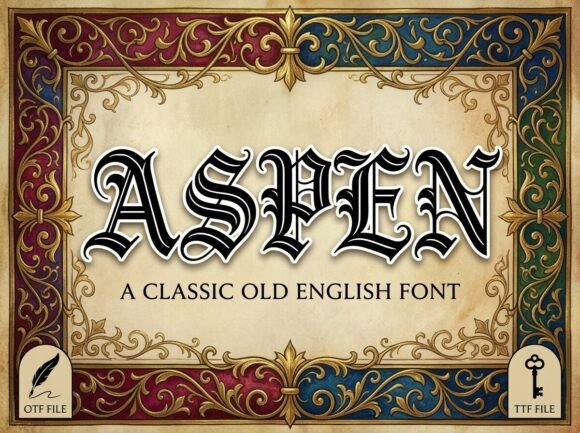
There’s a reason certain designs feel instantly important. They carry a weight, a sense of history that cuts through the digital noise. This is the domain of Aspen, a classic Old English typeface that doesn’t just display text—it declares it. Forget the notion that blackletter fonts are only for historical reenactments or heavy metal logos. Aspen is a refined, premium font that bridges centuries, offering the formal authority of a medieval manuscript with the clean precision needed for contemporary brand identity and editorial design.
At its core, Aspen is defined by its sharp, rhythmic vertical strokes and the intricate, flared terminals that give each letterform a life of its own. It’s a display font with a commanding presence, designed to be the centerpiece of a layout, not a supporting player. The personality of this typeface is one of heritage and gravitas. It speaks of tradition, craftsmanship, and a certain timeless elegance. When you choose Aspen, you’re not just selecting a style; you’re invoking the "royal-manuscript" soul of calligraphy, a quality that immediately elevates a project’s perceived value.
Strategic Applications for a Timeless Typeface
Understanding where a font like Aspen excels is key to using it effectively. Its strength lies in applications where first impressions are paramount and a sense of legacy is desired. This isn’t a font for body copy in a user manual; it’s a creative font for moments that need to resonate.
- Luxury & Craft Branding: Imagine a high-end whiskey bottle, an artisanal chocolate box, or a bespoke leather journal. Aspen’s detailed letterforms are perfect for packaging design and logo design where a story of heritage and meticulous craft needs to be told. It instantly communicates premium quality.
- Publishing & Editorial: For an independent fantasy novel, a collection of gothic poetry, or a limited-edition art book, Aspen’s cover typography sets an unforgettable mood. It’s a natural fit for "dark-academia" aesthetics, promising depth and intellectual intrigue before a page is turned.
- Formal & Ceremonial Design: The inherent dignity of Aspen makes it an exceptional choice for high-end diplomas, award certificates, event invitations, and luxury menu headers. Its formality assures the recipient of the document’s significance.
- Digital & Social Media: In the crowded space of social media graphics, a striking font is a powerful tool. Aspen creates arresting headers for blogs, YouTube channels, or Instagram profiles that focus on history, literature, luxury, or fantasy, helping to build a distinct and recognizable visual brand.
Making Aspen Work: A Practical Design Guide
Adopting a powerful display font like Aspen requires a thoughtful approach. Its strength is its character, but that must be balanced with modern design principles of clarity and function. Here’s how to integrate it successfully into your projects.
Mastering Font Pairings for Balance
Aspen’s ornate details demand a calm, stable partner. The rule of contrast is your best friend here. For a clean, modern look, pair it with a geometric sans serif font. The simplicity of the sans serif will provide breathing room and ensure readability for secondary text. If you’re aiming for a more traditional or literary feel, a classic serif font with a generous x-height can create a harmonious yet distinguished pairing. Avoid pairing it with other decorative fonts like a script font or a handwritten font, as this will almost always create visual chaos.
Ensuring Readability and Visual Hierarchy
Aspen is built for headlines, subheadings, and short, impactful phrases. Its intricate letterforms, while beautiful, reduce legibility at small sizes or in long paragraphs. Use it strategically to establish the top of your visual hierarchy. Let it command attention in a logo or a headline, then use your chosen companion font for all supporting text. Always test your designs at the intended viewing size—what looks magnificent on a large monitor may become an unreadable blur on a mobile screen or a small printed label.
Evaluating Project Fit and Licensing
Before committing, ask yourself: Does my project’s story align with themes of tradition, authority, or luxury? If you’re designing for a cutting-edge tech startup or a playful children’s brand, Aspen is likely not the right tool. However, for a law firm’s letterhead, a university’s crest, or a heritage brand’s rebrand, it could be perfect. Always review the font’s included styles—does it have the weights and alternates you need? Finally, for any commercial work, from client projects to products for sale, ensure you have the correct commercial font license. This is a non-negotiable part of using professional design assets.
In the end, Aspen is more than just a creative font; it’s a design decision. It’s a commitment to a specific aesthetic that can profoundly shape audience perception. Used with intention, it doesn’t just decorate a project—it gives it a voice, a history, and an undeniable sense of purpose. For designers, marketers, and creators looking to inject timeless authority into their work, Aspen offers a direct line to the grandeur of the past, perfectly adapted for the demands of today.