Unleash Vintage Terror: A Deep Dive into Horror Scratch
There is a specific kind of electricity that runs through the design world when a project demands a visceral, gritty edge. We have all been there—staring at a blank artboard, trying to convey "danger," "spooky," or "aggressive" using a standard sans serif font. It just doesn't work. Clean lines and geometric perfection often sanitize the very emotion you are trying to evoke. When you are designing for the darker side of the spectrum—whether that is a metal gig poster, a Halloween event flyer, or a horror novel cover—you need a typeface that has lived a hard life. Enter Horror Scratch, a premium font that doesn't just sit on the canvas; it tears through it.
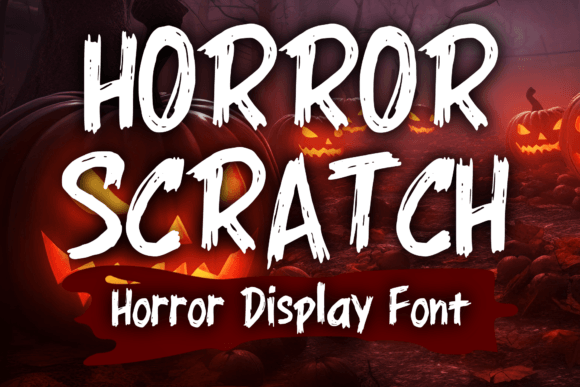
At its core, Horror Scratch is a grunge display typeface that draws heavily from the golden age of B-movies and the aggressive typography found in heavy metal album art. It is not a polite font. The visual characteristics are defined by distressed textures, uneven baselines, and jagged strokes that mimic the look of claw marks or decayed signage. The personality of this typeface is chaotic yet controlled; it manages to scream without becoming illegible. For designers working in the horror or alternative niches, this font serves as a bridge between the aesthetic of 1970s slasher films and modern, gritty branding.
The Anatomy of the Atmosphere
When evaluating a creative font like this, it is essential to look beyond the "cool factor" and understand how the visual noise translates to different mediums. Horror Scratch excels in creating immediate atmosphere. Because it is a serif font with heavy distressing, it carries a weight that grounds your composition. However, unlike a traditional serif font used for body copy, this is strictly a display typeface. The scratches and imperfections that make it look amazing at 72pt would turn into a muddy mess at 12pt.
The appeal lies in its texture. In an era of sleek, vector-perfect design, there is a growing demand for assets that look tactile. Horror Scratch provides that "hand-made" or "ravaged by time" look instantly. It fits perfectly into the current trend of vintage horror aesthetics that are dominating not just Halloween merchandise, but year-round fashion lines and indie publishing. It taps into a nostalgia for pulp comics and VHS cover art, making it a powerful tool for connecting with an audience that appreciates retro vibes.
From Screen to Street: Practical Applications
As a designer or business owner, your choice of typeface dictates how your audience perceives your brand identity. Using Horror Scratch signals that you are not afraid to be bold. It tells the viewer that the content is edgy, exciting, or perhaps a little dangerous. Here is how this font translates across various creative sectors:
- Apparel and Merchandise: This is where Horror Scratch truly shines. The distressed look of the font mimics the effect of screen printing on cotton t-shirts. It requires very little additional design work to look professional on a hoodie or a tote bag. For print-on-demand businesses focusing on the goth, metal, or Halloween niches, this font is a cornerstone asset.
- Publishing and Editorial Design: If you are an indie author or a publisher specializing in horror, thriller, or dark fantasy, cover design is your primary sales tool. Horror Scratch offers the visual hierarchy needed for a book cover, instantly communicating the genre to a potential reader scanning a shelf or a thumbnail online. It works equally well for chapter headings in interior layouts, adding a thematic touch to the reading experience.
- Events and Marketing: For Halloween parties, haunted houses, or local metal gigs, the poster is the invitation. A display font like Horror Scratch grabs attention from a distance. Its high-contrast, jagged edges ensure that your event title stands out against a busy background image.
- Digital and Social Media: In the fast-scroll environment of Instagram or TikTok, you have milliseconds to capture attention. Bold, textured typography in social media graphics stops the scroll. It is perfect for YouTube thumbnails, podcast cover art, or branding assets for a gaming channel.
Strategic Implementation and Font Pairing
Using a heavy grunge font effectively requires a bit of strategy. You cannot simply drop Horror Scratch onto a page and expect it to work without context. The most critical aspect of using this typeface is visual hierarchy. Because the font is so detailed and aggressive, it demands space. You should use it exclusively for headlines, logos, or short, punchy call-to-action phrases. Avoid using it for paragraphs of text; the texture will fatigue the reader's eyes, killing readability and engagement.
The secret to making Horror Scratch work in professional branding is contrast. This is where font pairing becomes your best friend. To let the horror aesthetic breathe, you need to pair it with something calm.
- Pair with a Clean Sans Serif: A modern, geometric sans serif font acts as the perfect counterweight. If Horror Scratch is the scream, the sans serif is the whisper. Use the sans serif for body copy, dates, times, and locations. This ensures your marketing materials remain professional and legible while maintaining that edgy vibe.
- Pair with a Vintage Script: For a retro pulp comic look, pairing Horror Scratch with a flowing script font can create a dynamic "good vs. evil" or "beauty and the beast" contrast. This works exceptionally well for book titles or event posters.
- Color Palette Considerations: Horror Scratch often looks best in monochromatic schemes—think white text on a black background, or blood red on grey. However, it can also look striking in neon colors against dark backgrounds for a synthwave or cyberpunk horror aesthetic.
Evaluating Fit and Commercial Viability
Before integrating any design asset into a commercial project, you must evaluate the fit and the licensing. Horror Scratch is a commercial font, which means you are paying for the legal right to use the design in profit-generating projects. This is crucial for entrepreneurs and small business owners. Using "free for personal use" fonts on merchandise is a legal liability you do not want to take.
When testing the font, pay attention to the glyphs and alternates included. High-quality premium fonts often come with different versions of letters (alternates) or stylistic sets that allow you to customize the look so that two words don't start with the exact same "H" or "S." This variety helps maintain the illusion of hand-crafted, organic lettering.
Finally, test your designs in context. If you are designing a logo, mock it up on a business card and a website header. If you are designing a t-shirt, place the graphic on a photo of a model. Does the texture of the font clash with the texture of the fabric? Does it render well on screen? By taking the time to pair Horror Scratch with complementary assets and testing its application, you move from simply using a font to building a cohesive, immersive world for your audience.
Ultimately, Horror Scratch is more than just a collection of jagged lines; it is a tone-setter. It provides the grit and authenticity needed to sell a scary story, market a heavy band, or create a memorable Halloween brand. When used with intention, it elevates your work from generic to visceral.