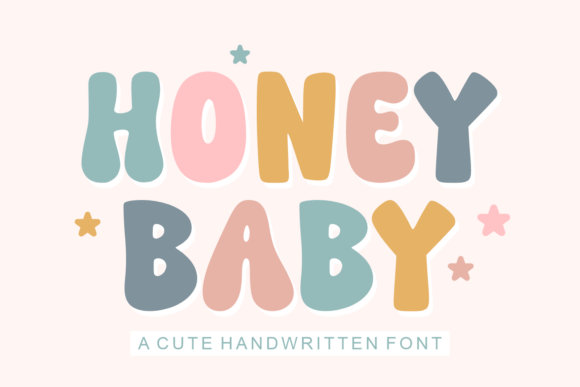
Honey Baby: A Playful Buzz for Your Design Toolkit
There's a certain warmth that comes with a typeface that doesn't take itself too seriously. It's the kind of font that makes you smile before you've even finished reading the word. Honey Baby is exactly that—a thick, retro-inspired display font built on a foundation of rounded forms and a cheerful, almost tangible energy. It's not just a collection of letters; it's a mood. The visual personality is one of approachable nostalgia, blending the bold confidence of mid-century advertising with a soft, friendly modernity. Each character carries a gentle weight, with smooth curves and a consistent, sturdy baseline that gives it a grounded, reliable feel despite its playful nature.
This isn't a typeface for whispering. Honey Baby is designed to speak clearly and joyfully. Its thick strokes and open counters ensure it remains legible even at larger display sizes, making it an excellent candidate for headlines, logos, and any text that needs to command attention without shouting. The overall appeal lies in its versatility within the "fun" category. It avoids the pitfalls of being too childish or overly whimsical, striking a balance that feels both nostalgic and refreshingly current. It’s the visual equivalent of a perfectly baked cookie—comforting, delightful, and universally liked.
Where Honey Baby Truly Shines: Real-World Applications
Understanding a font's character is one thing; knowing where to deploy it is where strategy meets creativity. Honey Baby excels in projects where personality and warmth are key assets. Think about the brands and contexts that thrive on connection and joy.
In brand identity, this creative font can become the cornerstone of a logo for businesses that want to appear friendly, trustworthy, and a little bit nostalgic. Imagine it for a local bakery, a children's boutique, a craft brewery with a playful edge, or a lifestyle brand targeting families. It instantly communicates an approachable vibe. For packaging design, particularly on products lining grocery or retail shelves, Honey Baby can make a product stand out with its bold, happy presence. It works beautifully on labels for artisanal foods, natural cosmetics, or specialty goods, adding a layer of homemade charm.
The digital space is another natural home. For web design, it can be a powerful tool for hero sections, call-to-action buttons, and promotional banners where you need to inject immediate energy. Its thick forms translate well to social media graphics, ensuring text on Instagram posts, Facebook ads, or Pinterest pins is not only readable but also conveys a positive, engaging tone that can boost audience interaction. In editorial design, such as magazine layouts or blog headers, it can be used sparingly to break the monotony of body text, adding a dynamic focal point that guides the reader's eye.
Integrating Honey Baby: Practical Guidance for Creators
Choosing the right premium font involves more than just liking how it looks in a specimen sheet. It's about evaluating fit, function, and technical compatibility. Here’s how to approach Honey Baby for your projects.
Evaluating Project Fit: Before selecting any typeface, define the core message of your project. Is it serious and authoritative, or is it inviting and fun? Honey Baby leans heavily into the latter. It’s perfect for campaigns, products, or brands that aim to create an emotional, positive connection. If your project requires a tone of stark minimalism, high-tech precision, or formal elegance, this likely isn't the right tool. However, if it's about community, creativity, joy, or nostalgia, it's a strong contender.
Testing Font Pairings: The true test of a display font is how well it plays with others. Honey Baby pairs exceptionally well with clean, neutral sans serif font families for body text. Fonts like Lato, Open Sans, or Montserrat provide a calm, readable counterbalance to Honey Baby's exuberance, creating a clear visual hierarchy. For a more curated, editorial feel, it can also be paired with a simple, geometric serif font. The key is contrast: let Honey Baby own the headlines while a more subdued typeface handles the details.
Reviewing Included Styles and Readability: Check if the font family includes stylistic alternates, ligatures, or multiple weights. These features can add valuable flexibility, allowing you to fine-tune the personality for different applications. Always test readability at the size you intend to use it. While its thick forms are generally legible, avoid setting long paragraphs of text in Honey Baby. Its strength is in short, impactful bursts. For body copy, always opt for a font designed for extended reading.
Commercial Licensing: This is a non-negotiable step. If your project is commercial—whether it's a client logo, a product for sale, or a monetized blog—you must ensure you have the correct commercial font license. Reputable foundries and marketplaces provide clear licensing terms. Using a font without the proper license for commercial work is a risk that can lead to legal issues and undermine your professional integrity. Treat your design assets with the same care you would any other business investment.
Ultimately, Honey Baby is more than just a retro font; it's a design tool for injecting positivity. Used thoughtfully, it can transform a mundane layout into something memorable, helping brands connect with their audiences on a more human, joyful level. It reminds us that sometimes, the best design choices are the ones that make people feel good.